In this article
Identify which process is underway, track the evidence for it and avoid counting the same expected credit twice.
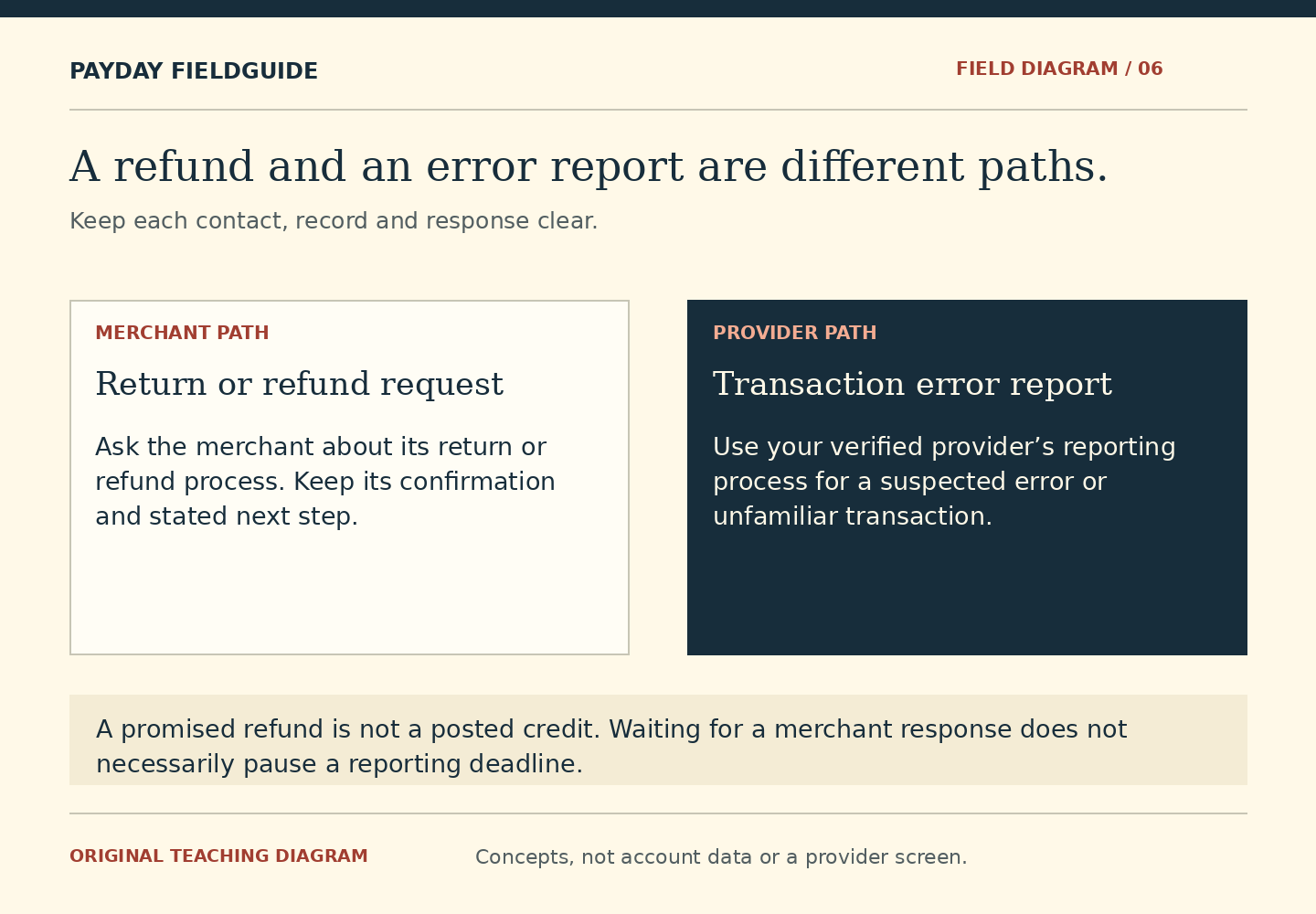
Three events can all make money appear to come back: a merchant refunds a completed purchase, an unused authorization is released, or a card provider handles a reported transaction problem. They are not interchangeable. Naming the process correctly helps you decide what evidence to keep and what remains unresolved.
Start with the original transaction
Ask whether the purchase completed, whether you authorized it and what the merchant has confirmed. A returned item with a refund receipt has a different history from a hotel hold or a charge you never approved. The displayed account description alone may not explain which process is underway.
Wisely’s authorization-hold explanation describes temporary amounts that can exceed the final purchase. Releasing an unused portion of such a hold is different from issuing a refund for a completed sale. Record the final purchase separately from the temporary reservation so the budget does not count the same change twice.
Case one: a returned purchase
In a fictional example, Nia buys shoes for $64, the purchase posts, and the store later accepts a return. The store gives her a refund receipt. Nia keeps the original purchase receipt, return date, refund amount and the payment method the store says will receive the credit.
The store’s receipt documents its action; it does not by itself establish that the money is available on the card. Wisely’s refund-balance FAQ says pending credits are not included in available funds until they post and clear. Nia marks the $64 as expected, checks the merchant’s stated processing information and waits for an actual matching credit before assigning it to another purchase.
Case two: the unused part of a hold
Suppose instead that an invented $100 authorization is associated with a final $64 purchase. When the final amount replaces the reservation and the unused $36 becomes available, Nia has still spent $64. She has not returned the shoes or received a $36 price reduction.
A notebook that records the $100 as final spending and then records the $36 as new income may reach the correct net arithmetic while telling the wrong story. Better labels make later comparisons easier: $64 purchase, $36 unused authorization released. Keep the example’s amounts separate from actual merchant practices, which can differ.
Case three: a transaction problem
Now imagine Nia does not recognize the $64 purchase at all. A return request is not the right description of that concern. She should contact the official card provider promptly about suspected unauthorized use. Wisely’s pending-transaction guidance specifically distinguishes suspected fraud from ordinary pending amount adjustments and directs readers with fraud concerns to customer service.
A dispute is a reported issue requiring review. Its existence is not proof that a refund is owed or that a credit is permanent. If the provider issues a credit while reviewing the matter, ask how it is classified and what follow-up is required. Record the provider’s answer rather than assuming that a balance change closes the case.
Keep two conversations in one chronology
Sometimes a merchant offers a refund while a card-provider case is already open. Keep both parties informed through their verified processes about relevant developments. Save the merchant’s refund confirmation, the provider’s case reference and any posted credit. Do not submit contradictory descriptions or seek duplicate recovery for the same loss.
For example, a store may say it refunded only one item from a larger order. A credit smaller than the original total may then be correct for that partial return. Compare the item amounts, taxes or other adjustments described on the actual return record; do not assume every refund should equal the whole purchase.
A compact tracking note
- Original purchase: amount, merchant, date and posted status
- Reason for the expected change: return, authorization release or reported error
- Evidence: receipt, confirmation, case reference and relevant dates
- Current account result: pending credit, posted credit, released reservation or still unresolved
- Next check: the provider or merchant’s stated next step
If the expected change does not occur, use this note to ask a precise question through the official route. The error-packet method helps organize more complex cases. Until the result is confirmed, treat expected money as expected. That simple distinction protects the spending plan while preserving a clear record of what should happen next.